Noticed this morning that the CBS Early Morning Show is now being broadcast in HD, it being the last of the network morning shows to do so (I don't watch them regularly, so I'm not really sure when this happened, just that it's relatively recent).
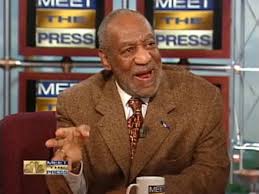
Also, came the news that NBC's "Meet the Press" will be aired in HD for the first time tomorrow morning. Seems a little strange that MTP, one of the longest-running shows in all of television, is so late in the day in this regard. Almost every major-network (and PBS) show I can think of is in wide-screen HD besides a couple of low-rent ones like the one on ABC with the British nanny. It has been almost two years since Tim Russert's death, and MTP's new host David Gregory had stuck with the old set until now. From what I saw of the new digs from the preview, it's not anything to write home about --- heavy on bookshelves (Books as props, likely. Wonder how many of them Mr. Gregory has read.... My guess: seven) and opaque blue-glow glass. Too many colors, which is something most people get wrong in design/decoration. If they had worked off of the historic MTP colors of medium blue, gold and white (which are used in the new info/identification bars) a very nice set could have materialized. As it is, the set is very empty and divided down the middle by a large black table (a very 'This Side vs. That Side' feel for a show about politics), and too busy around the perimeter. Not something to write home about, but I guess it is something to write a blog entry about.
With the leaves coming out once again, we've effectively lost WSBK-38 (real-channel 39) from the Boston line-up and WLVI-56 (real-channel 41) was pixelating a bit this evening. It's for just this purpose I went to such heroic measures with our antenna system. It's good to have a back-up for when things go wrong.
Showing posts with label antenna. Show all posts
Showing posts with label antenna. Show all posts
01 May 2010

12 June 2009
Entering the Digital Age
So, the official DTV-Day has finally come. As I had anticipated, just as with the WTIC - WFXT situation, we've now lost WCVB --- channel 5 (real-channel 20) from Boston. This is, no doubt, because WTXX in Hartford was also allocated to real-channel 20. (I have written about this in further detail previously). We've lost FOX (not that we ever really had it) and the most reliable ABC. These situations represent an abject failure of the FCC to fulfill its original purpose, which was to stop people from broadcasting on the same frequencies w/in a specified coverage area. Sent a note about this situation to a New York Times reporter who wrote an article on the digital switch today.
I think I may try ganging the XG-91 antennas to see if it helps. Pain in the rear end to keep having to go up on the roof and tinker with things. All too often it doesn't do anything but waste my time.
On the plus side, WBZ 4 out of Boston is coming in again after being lost to us for the last couple of weeks. They increased their ERP (signal strength) from 825kW to 915kW, and that seems to have pushed us back over the threshold.
As of this writing, WHDH 7 broadcasting from Boston hasn't yet done their so-called "cold switch" of turning off their analog signal on channel 7 and moving their digital signal from real-channel 42 to channel 7. Many stations seem to have done their switching already, but perhaps their engineers are waiting until the midnight deadline for some reason.... Perhaps to show Game 7 of the Stanley Cup Finals. Pittsburgh just scored, increasing their lead to 2-0. For the record, I've been rooting for the Penguins in this series. Underdogs have to stick together.
I think I may try ganging the XG-91 antennas to see if it helps. Pain in the rear end to keep having to go up on the roof and tinker with things. All too often it doesn't do anything but waste my time.
On the plus side, WBZ 4 out of Boston is coming in again after being lost to us for the last couple of weeks. They increased their ERP (signal strength) from 825kW to 915kW, and that seems to have pushed us back over the threshold.
As of this writing, WHDH 7 broadcasting from Boston hasn't yet done their so-called "cold switch" of turning off their analog signal on channel 7 and moving their digital signal from real-channel 42 to channel 7. Many stations seem to have done their switching already, but perhaps their engineers are waiting until the midnight deadline for some reason.... Perhaps to show Game 7 of the Stanley Cup Finals. Pittsburgh just scored, increasing their lead to 2-0. For the record, I've been rooting for the Penguins in this series. Underdogs have to stick together.
10 June 2009
10 June 2009
It was a pretty good day. Had a mental checklist of things I wanted to do, and while I didn't get it all done, I got enough of it done to earn my shower.
Tried tweaking the top teevee antenna by moving it up about 6" to the top of the mast pole and tilting it slightly to point over the leaves. This doesn't appear to have done much of anything, though this probably isn't the day to gauge its effectiveness, given the dreary weather. I tried this because since the leaves came out in full force, we've lost a reliable signal from WBZ-4, WLVI-56 and WSBK-38 (all out of Boston). The meter jumps willy-nilly from mid-20s to mid-60s, to 0, to mid-20s.... The above tweak has been recommended by the technologically-inclined in avsforum.com and the like in the 'Try it and see what happens' milieu. I will leave it as is until after the official digital conversion on Friday. But if it's still a problem then, I still have one item left in my bag of tricks. It's called double-stacking, and with my two XG-91 antennas (an earlier post about our antenna system is required reading to have a better understanding of what I'm saying), the idea is that I would point them both toward the target signal farm (Boston) and connect their two output wires with a good signal combiner (read: a signal splitter, inverted), then connect to the pre-amplifier and into the house. In theory, this would double the signal strength. We'll see if it comes to that. But then again, I'm getting Boston's iON station, 68 (real-channel 32) that has a lower reading than the drop-outs. I just don't know what to make of it other than my "Digital is a finicky b----" line.
While I was on the roof, I took off the lower antenna's pre-amplifier and took it to the campground because reports were that the teevee there wasn't getting good reception of the Hartford channels. Sure enough, 61, 24 and 30 weren't coming in, and channel 3 was spotty at around 50%. I took off the old Radio Shack pre-amp and put on the Channel Master 7778. Went inside, rescanned the tuner (the Best Buy Insignia model) for extra measure and suddenly they were all coming in at 90%+. Wasn't getting channel 59, MyN, which I also haven't have any success with here at the house. All the info I've seen says it should come in, but it doesn't.
Went to the small nursery in the next town over and picked up some nice herb plants --- lavender and sage --- in a buy one-get one sale ($3.50), and two bell pepper plants to finish out the garden. At the big box stores and most other places, $3.50 will get one of the smallest Bonnie seedling plants. And it's nice to support a small, local business. We also dropped off a few items for an annual fund-raising tag sale that the nursery does. The owner's adopted son was killed while serving a tour in Afghanistan a few years ago, and a fund has been set up to build and supply an orphanage in Honduras. This had been the intention of the son even before his death (he was adopted from that country). It's the least we can do to offer some support to someone who made the ultimate sacrifice. ... Got home and put those herbs, a largish rosemary plant, and some others I'd started from seed (dill, parsley and basil) into a strawberry planter that's been hanging out empty for a while. It just feels good to put your hands in the soil and know that your work and care is growing things.
Brought the trailer home and loaded on a pile of wood that I've been wanting to move out of the yard for a while. That will be delivered and burned at the aforementioned campground this weekend. We got it from a nearby house that had a tree (a red oak) cut down and for some reason or other, it was stacked against our woodpile under the deck. It's been sitting here for about two years because it's just slightly too long for our wood stove. Makes quite a difference now that it's gone, and I'm keen on doing something with the spot now. Also, raked up the debris that was under some of the pallets that we stack our wood on, and threw them in the trailer for burning as well... their bottom-side wood was badly deteriorated. We need to either get some new pallets or come up with a different rack system for firewood storage.
Tried tweaking the top teevee antenna by moving it up about 6" to the top of the mast pole and tilting it slightly to point over the leaves. This doesn't appear to have done much of anything, though this probably isn't the day to gauge its effectiveness, given the dreary weather. I tried this because since the leaves came out in full force, we've lost a reliable signal from WBZ-4, WLVI-56 and WSBK-38 (all out of Boston). The meter jumps willy-nilly from mid-20s to mid-60s, to 0, to mid-20s.... The above tweak has been recommended by the technologically-inclined in avsforum.com and the like in the 'Try it and see what happens' milieu. I will leave it as is until after the official digital conversion on Friday. But if it's still a problem then, I still have one item left in my bag of tricks. It's called double-stacking, and with my two XG-91 antennas (an earlier post about our antenna system is required reading to have a better understanding of what I'm saying), the idea is that I would point them both toward the target signal farm (Boston) and connect their two output wires with a good signal combiner (read: a signal splitter, inverted), then connect to the pre-amplifier and into the house. In theory, this would double the signal strength. We'll see if it comes to that. But then again, I'm getting Boston's iON station, 68 (real-channel 32) that has a lower reading than the drop-outs. I just don't know what to make of it other than my "Digital is a finicky b----" line.
While I was on the roof, I took off the lower antenna's pre-amplifier and took it to the campground because reports were that the teevee there wasn't getting good reception of the Hartford channels. Sure enough, 61, 24 and 30 weren't coming in, and channel 3 was spotty at around 50%. I took off the old Radio Shack pre-amp and put on the Channel Master 7778. Went inside, rescanned the tuner (the Best Buy Insignia model) for extra measure and suddenly they were all coming in at 90%+. Wasn't getting channel 59, MyN, which I also haven't have any success with here at the house. All the info I've seen says it should come in, but it doesn't.
Went to the small nursery in the next town over and picked up some nice herb plants --- lavender and sage --- in a buy one-get one sale ($3.50), and two bell pepper plants to finish out the garden. At the big box stores and most other places, $3.50 will get one of the smallest Bonnie seedling plants. And it's nice to support a small, local business. We also dropped off a few items for an annual fund-raising tag sale that the nursery does. The owner's adopted son was killed while serving a tour in Afghanistan a few years ago, and a fund has been set up to build and supply an orphanage in Honduras. This had been the intention of the son even before his death (he was adopted from that country). It's the least we can do to offer some support to someone who made the ultimate sacrifice. ... Got home and put those herbs, a largish rosemary plant, and some others I'd started from seed (dill, parsley and basil) into a strawberry planter that's been hanging out empty for a while. It just feels good to put your hands in the soil and know that your work and care is growing things.
Brought the trailer home and loaded on a pile of wood that I've been wanting to move out of the yard for a while. That will be delivered and burned at the aforementioned campground this weekend. We got it from a nearby house that had a tree (a red oak) cut down and for some reason or other, it was stacked against our woodpile under the deck. It's been sitting here for about two years because it's just slightly too long for our wood stove. Makes quite a difference now that it's gone, and I'm keen on doing something with the spot now. Also, raked up the debris that was under some of the pallets that we stack our wood on, and threw them in the trailer for burning as well... their bottom-side wood was badly deteriorated. We need to either get some new pallets or come up with a different rack system for firewood storage.
27 February 2009
An Antenna System For the Digital Age
 I promised that I would post some pictures and explain a little about the antenna setup that I installed.
Let me begin at the beginning with an explanation about the circumstances of location. We are located in northeast Connecticut in a spot that is overlapped by three television markets (DMAs) --- Boston, MA ~ 55 miles; Providence, R.I. ~ 35 miles; and Hartford, CT ~ 30 miles. Being on the fringes like this combined with some specific topographical challenges at this location, it's considered a "Low Signal Spot." We had an existing Radio Shack VHF-UHF antenna (this thing was beastly; over 8' long and weighed ~ 20 pounds) mounted to the chimney using a standard chimney strap setup. I had never really paid much attention to our reception, as when I was in college I was busy most of the time. That said, the antenna was fixed (no rotator) toward Providence, reception was always snowy at best, and we didn't get much signal from the other two markets. So, with the coming of digital over-the-air (OTA) television, I got a digital converter box and after seeing the results, I decided to upgrade the antenna system. Radio Shack, while being one of the only places around where you can actually walk out of a store with an outdoor antenna, does not make the best ones for UHF (channels 14-69... currently).
First, I did a lot of reading on the subject, from D-I-Y books, browsing through the 'grey ladies' (read: text heavy) that are the avsforums.com message boards, online resources to see what our needs would be as far antenna style and signal gain (dB), address-specific signal patterns on tvfool.com. I read until my eyes bled. That's just how I am. I like to know everything I can about things that I'm working on, or that I'm interested in. I decided that I was going to take the antenna off of the chimney because many sources said that the soot and emissions really degrade antenna performance over time, and also chimney mounts are not good for the structural soundness of your chimney.
I ordered and installed a 5' tripod mount from Solidsignal.com, using lag bolts screwed into the roof trusses, using the included "pitch pads" underneath, and then covered the bolts with outdoor-rated silicone caulk. When making any kind of hole in your roof, you need to be very careful or the result could cause major problems and be costly to fix. As an aside, our trusses are 2"x6" lumber, whereas most people just have 2"x4"s --- our house was built a short time after the Hartford Civic Center's roof collapsed in the 1970s from the weight of snow, and my father insisted on stronger trusses, that were above code requirements. I also eventually decided on the Antennas Direct XG-91 antenna. You will see this in the picture above. These arrive knocked-down, so you do need to assemble them, which was a little challenging b/c it made my fingers and hands a little sore from having to apply some force to get them in. I'm very happy with them and their performance across the UHF spectrum that digital uses, as well as their VHF-high (channels 7-13) gain. Though it's listed as UHF-only, I get good reception on digital channels 9, 12 and 13, and after the full switch, I'll see how it gets channel 7 out of Boston when they switch from real-channel 42 to channel 7 as their final channel designation. I got two of them, actually, because for various and sundry reasons, I also decided that I did not want to hassle with a rotator. A rotator costs ~ $90, puts another box in the living room, and has technical and wind-load issues of its own. Nevermind that I would have to attempt to train humans how to use it (Aside: dogs are much better than humans). I opted for less fuss. The top antenna is pointed toward Boston at 77 degrees on the compass, the bottom antenna is pointed toward Providence at ~110 degrees. I also used Channel Master pre-amplifiers (CM 7777 for the top and the CM 7778 on the bottom. The 7777 model performs better) to increase the signal strength because we are at such a distance from the transmitters / antenna farms.
For the antenna mast, I originally used the existing pipe, which was rusty, and I spray painted with a Rust-Oleum hammer-finish spray designed to go on right over rust. It was 8 feet long, in two sections (male and female ends). But, I decided that I wanted to get up a little higher to improve reception, and also get a galvanized mast that wouldn't rust (rust was already showing through scratches a couple of weeks later). I looked for a while at the hardware stores that didn't sell good quality antenna masts, and online, they weren't expensive at $6, yet the shipping cost for one mast was $21! That's one of the problems with having to order most A/V gear like this on-line. Radio Shack does not stock nearly as well as they did once upon a time and their products aren't very great. The lack of availability of antennas, pre-amps and other such products, at least in this area, is disappointing. Especially for those people who are trying to increase their signal strengths to overcome the so-called "digital cliff." Anyway, I was in the gardening section of Lowe's and saw some fence-rail that was 10 feet long, 1 1/4"-diameter, with sleeved male-female ends and 18-gauge galvanized steel. So, I took it over to the pipe section and kindly asked them to cut it in half. I left the store with two 5-foot sections, and also picked up 2 each of galvanized 1 3/4" bolts, washers and nuts. Cost of this was about $13. I put the male-female ends together, drilled through the diameter in two spots in the doubled section (staying ~ 1" away from the ends so as to not compromise strength) and installed these bolts. This leaves it open that I could take the masts down in smaller sections rather than wielding a 10-foot pole in various weather conditions. In practice, I actually did put the antennas on the full length outside of the tripod and then placed it in. Aimed the top antenna toward Boston at 77 degrees and tightened the tripod to fix the mast. Then, aimed the lower antenna (which can be reached at standing height) toward Providence at 110 degrees.
I picked up some Philips Quad Shield RG-6 cable wire (this is widely recommended wire) at the big-box hardware store along with some compression F-connectors, put on at the end of each cut, and the compression tool to make them weatherproof (though, I used weather boots over each of these that are outside). Cut the wires to go from the antennas to the pre-amps, from the pre-amps and down the side of the house (I tucked the RG-6 into the vinyl J-channel strip that runs alongside our chimney, for the sake of appearance) to the existing cable wire entry point box, shown below.
 Inside, the cables are looped to fit. I attached an F-connection grounding clamp between the RG-6 wires coming down from the roof (one wire for each separate antenna --- you'll see how I solve this soon) and the wires coming inside the house. From the grounding block, there is a port to put a ground wire to a ground pole (you only see the top of this in the photo; it is buried about 3 feet into the ground to serve as a ground for lightning). There are two separate entry holes for the RG-6 wire, which each lead into the electrical block for their respective pre-amplifiers.

The output from each of these wires then leads into an A-B switch. If you want to watch from the Boston antenna, you put the toggle switch on the A side; if you want the Providence antenna, you push the toggle to the B side. This can conceivably be a pain in the rear, having to go downstairs every time you want to switch between markets, but it's not really an issue as it mostly stays on the Boston side because it offers more channels (especially PBS), and has more HD programming for local news, etc. that many smaller markets haven't gotten around to yet.
(What would a basement workshop be without old license plates over the door?)

After the A-B switch, a single RG-6 wire goes to the Channel Master 3044 four-way distribution amplifier, shown above. From there, four wires spread to rooms through the house via wall plates. I will comment that this distribution amplifier boosted the signal by ~10 percent, based on the signal readings I observed on the converter box. Fishing wire and installing the wall plates was easy for a few, but presented a challenge to get to the living room through a small 'crawl space.' I'll spare most of the details, but it involved drilling through the floor with an old-fashioned bit brace, using the collapsible chimney sweep extension poles and some wire coat hanger contrived into loops for our purpose.
This story of installation does leave out numerous steps of trial and error with various antennas that I got second-hand and an 8-bay Antennas Direct DB-8 that I ordered and eventually used elsewhere. I am really thankful for all of the advice I got from the people who post information online and share their valuable experience. In all, this extensive antenna setup cost me about ~$700 for materials and took a fair amount of time. If you attempt to set up an antenna system of your own, I suggest that you have a good deal of D-I-Y experience to draw on, do your research, purchase quality products and be careful to the utmost, especially when on the roof.
At Christmas, we got a 40" Sony 1080p HDTV at Sam's Club at a good price. I plugged it in, scanned for channels, and I'm very happy with its performance, which is better than the converter boxes that everyone has seen a million times in the DTV switch commercials. My system is getting channels from Boston down to -108.8 dBm, according to my tvfool.com report. The picture is excellent, has been very reliable even in stormy conditions --- 50 mph winds, rain, snow, sleet, an ice storm.... OTA is also the highest quality of signal you can use for an HDTV because there is no compression used to deliver it to your house. We're getting 42 discrete channels from the three DMAs. Among them: 3 NBC, 2 FOX, 3 CBS, 9 PBS, 2 CW, Retro (RTV), THiS, iON and several independent stations.... If there isn't something on that interesting, just turn the TV off. I don't see the need to pay a cable company $60 per month for a lot of channels you never watch. I have also heard of a lot of people who are dumping cable or satellite service and going OTA and supplementing with mail-delivery DVD service like NetFlix and online viewing for the cable network shows they follow.
Digital can be a finicky b---h at times, especially in the early setup, but once it's finished it's got a lot in its favor.
17 February 2009
Soft Digital Switch Scheduled for Midnight
For anyone who's been living under a rock, the U.S.'s terrestrial digital switch will be occurring at midnight. Originally, it was planned to have all broadcasters (except low-power stations) cease their analog signals and broadcast digital signals only. Well, that simple plan got very muddied last week as Pres. Obama signed a bill delaying a mandatory digital switch until June 12. The reasoning is that some people will not be ready, including so-called vulnerable populations including the elderly and non-English speakers. This argument is not without merit, but it also means that progress is held up.
Now, there are eleventy-one caveats to the original legislation. Some stations that applied to the FCC will be going ahead with the analog shut-off. Some stations will be continuing analog at a cost of ~$20K-30K per month for electricity to the transmitter. There are a couple of dates between now and June that they can apply to cease their analog signal before the June date. This is just scratching the surface at the confusion and chaos the delay bill has caused --- chaos for the technical aspects of broadcasting, licensing and financing for stations who had expected the 18 February "date certain" to be more... well... certain and confusion for people who have been expecting the switch.
As near as I can tell, the federal government hates the KISS (Keep It Simple, Stupid) method of doing anything.
We are an antenna-only family in northeast Connecticut, and over the past year I've taken the necessary steps to upgrade our antenna system. I promise to go into more detail about the particulars of our situation (we live on the outer regions of 3 major media markets --- Providence, R.I.; Hartford, CT; and Boston, MA) and how I designed and set up the system. I am an over-the-air (OTA) proselytizer. I just don't see why we should pay $60+ per month for cable or satellite service for a lot of channels filled with trashy content that won't be watched. Nevermind that there is not an inclination to waste time in front of the TV as you try to justify paying that much. As such, we get clear reception (to say nothing of HD broadcasts!) on a variety of network and PBS channels. I really don't feel I'm missing out on anything.
Most of the Providence, R.I., stations are going to be switching at midnight. We'll see how it goes.
Now, there are eleventy-one caveats to the original legislation. Some stations that applied to the FCC will be going ahead with the analog shut-off. Some stations will be continuing analog at a cost of ~$20K-30K per month for electricity to the transmitter. There are a couple of dates between now and June that they can apply to cease their analog signal before the June date. This is just scratching the surface at the confusion and chaos the delay bill has caused --- chaos for the technical aspects of broadcasting, licensing and financing for stations who had expected the 18 February "date certain" to be more... well... certain and confusion for people who have been expecting the switch.
As near as I can tell, the federal government hates the KISS (Keep It Simple, Stupid) method of doing anything.
We are an antenna-only family in northeast Connecticut, and over the past year I've taken the necessary steps to upgrade our antenna system. I promise to go into more detail about the particulars of our situation (we live on the outer regions of 3 major media markets --- Providence, R.I.; Hartford, CT; and Boston, MA) and how I designed and set up the system. I am an over-the-air (OTA) proselytizer. I just don't see why we should pay $60+ per month for cable or satellite service for a lot of channels filled with trashy content that won't be watched. Nevermind that there is not an inclination to waste time in front of the TV as you try to justify paying that much. As such, we get clear reception (to say nothing of HD broadcasts!) on a variety of network and PBS channels. I really don't feel I'm missing out on anything.
Most of the Providence, R.I., stations are going to be switching at midnight. We'll see how it goes.
Subscribe to:
Posts (Atom)